






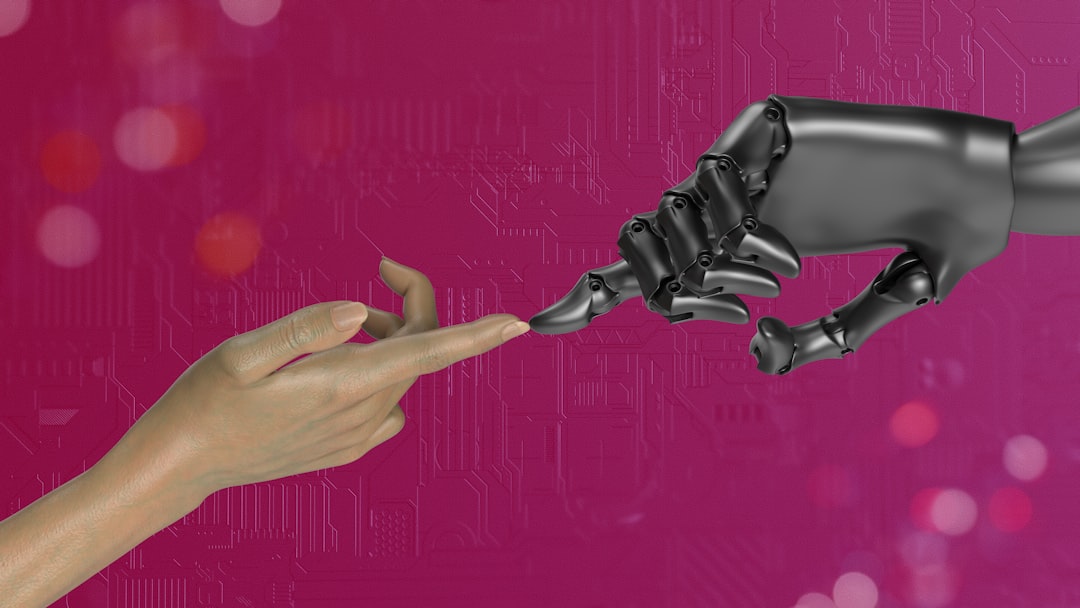
The AI Impact on Daily Life: Navigating the Machine Awakening
Artificial Intelligence (AI) is no longer confined to science fiction films; it’s here, pervasive, weaving the threads of our daily lives. From the first sparks of a “thinking” machine in the 1950s to today, with intelligences that learn autonomously at breakneck speed, AI has grown exponentially. It’s not just another tool; it’s a giant wave reshaping how we live, work, and even think. At its core, AI seeks to learn and even surpass what we, humans, do with our minds: solve problems, understand the world, and communicate.
We hear stories that fill us with hope or fear regarding AI. But the truth, as always, is more complex. AI opens up a myriad of doors for incredible advancements, from curing diseases to better caring for our planet. However, it is also a Pandora’s box full of difficult questions that demand clear thinking and sensible action. We aim to thoroughly understand this transformation: what is driving the world, what wonders it can achieve, what dilemmas it poses, and why we urgently need global consensus to guide its path toward a good future for all. We will explore how AI is redefining our jobs, our relationships, our health, what we learn, and even the idea of what is ours and what we control in this digital era. It’s not just better technology. It’s a before and after that forces us to look in the mirror and ask ourselves: who are we now alongside these artificial minds?
1. AI in Our Pockets and Work: The Great Shake-Up
Artificial Intelligence is at the eye of an economic hurricane, promising to turn upside down how we produce, how we work, and how businesses operate. Its ability to perform tasks autonomously, improve processes, and extract value from mountains of data is building a future where efficiency is the new sovereign.
1.1. When Machines Go to Work: Efficiency is the New King
One of the most obvious changes brought by AI is automation. Previously, automation was primarily about robots in factories. Now, AI delves into our minds, so to speak, taking on repetitive and rule-based tasks across almost every sector: from banking (detecting fraud) to customer service (those “chatbots” that respond to you), logistics (determining the best route for your package), and even medicine (analyzing images for diagnoses). This not only saves us from errors and costs but also performs tasks at dizzying speeds. “Smart factories” can predict which machine will fail, organize the entire supply chain in real-time, and customize a product as if by magic. In services, AI knows us so well that it recommends exactly what we want, leading to increased purchases and greater satisfaction. The promise is unprecedented productivity, freeing us from the mundane so we can use what makes us human: our creativity, critical thinking, and capacity to connect. This deepens the AI impact on daily life by streamlining everything from shopping to healthcare.
1.2. Jobs Vanish, New Jobs Emerge: Where Do We Stand?
The debate about whether AI will take our jobs is one of the most contentious. It is true that many jobs will disappear, particularly those that are repetitive, predictable, and require little training, such as drivers or certain administrative roles. However, history has shown us that every time a machine takes a job, new opportunities emerge. AI is no exception; it is already creating immense demand for new heroes we need in this era: data scientists, AI engineers, and even AI ethicists (people who ensure AI is fair and beneficial).
The challenge is: can we adapt as quickly as AI evolves? We urgently need to learn, unlearn, and relearn. Retraining is essential to equip people with the skills the future demands. Adaptability, critical thinking, creativity, and, above all, emotional intelligence are qualities that machines struggle with and are now highly valued. Governments, educational institutions, and businesses must collaborate to ensure a smooth transition and that the benefits of AI reach everyone.
1.3. New Ways of Doing Business: AI Turns Everything Upside Down
AI not only improves existing processes but also sparks businesses and markets that were once pure fantasy. Mass personalization, for example, is transformed by AI. Netflix and Amazon know exactly what to recommend to you. The platform economy, exemplified by Uber or Airbnb, where AI orchestrates everything, has revolutionized entire industries.
AI continues to innovate in fields we considered untouchable. In agriculture, “smart” fields use AI to know when to irrigate or what’s affecting a plant, making everything more efficient and sustainable. In energy, AI helps our electrical grids become smarter, predicting when we need more power and where to source it. Countless AI startups emerge daily, solving problems from discovering new medicines to creating digital avatars. This wave of innovation not only generates wealth but also makes things accessible to more people, although it also raises concerns about the risk of a few tech giants monopolizing the benefits. The transformative AI impact on daily life is evident in these groundbreaking business models.

2. AI and Us: The Labyrinth of Right and Wrong
Beyond the economic benefits, the expansion of Artificial Intelligence brings profound questions that challenge justice, ownership, freedom, and even how we relate to each other. If we are not careful, we could build a future that is outwardly brilliant but inwardly flawed.
2.1. Machine Biases: A Reflection of Our Own
One of the greatest ethical dilemmas of AI is its potential for bias. AI systems learn from the data we feed them. And if we provide data tainted with our own prejudices (against certain individuals, races, or genders), AI will not only copy them but amplify them. This has serious consequences:
- Justice: An algorithm could issue harsher sentences to certain groups if police data has a biased history.
- Hiring: An AI that screens resumes might favor men or people from specific backgrounds, perpetuating inequalities.
- Credit and Insurance: It could deny us services based on hidden biases within the data.
- Facial Recognition: Systems that perform less accurately with women or people of color, leading to dangerous errors.
To combat this, we need to provide AI with diverse data, create “fair” algorithms, and develop explainable AI that tells us why it makes certain decisions. We need AI to be just so it doesn’t become a silent police force that discriminates against us unknowingly.
2.2. Our Privacy: A Luxury or a Right? AI and Big Brother
AI thrives on data. The more data, the smarter it becomes. But this insatiable hunger for information directly clashes with something as fundamental as our privacy. Collecting vast amounts of personal information, often without our full awareness, is commonplace in the digital age. AI analyzes and connects this data to understand our behavior, preferences, emotions, and even our future intentions. This opens the door to:
- Digital Big Brother: Governments and corporations can use cameras, facial recognition, and communication monitoring to track us, eroding our freedom.
- Knowing Us So Well They Can Manipulate Us: AI can create such detailed profiles of us that it can influence our purchasing decisions or even our votes, sometimes without us realizing it.
- Information Theft: If our entire lives are within AI systems, a cyberattack could be devastating.
Laws like GDPR in Europe are a good start to protecting our privacy. However, AI continues to evolve, so we need to reinvent these protections and seek new solutions for AI to learn without exposing our personal data. This aspect profoundly impacts the AI impact on daily life by reshaping personal security and autonomy.
2.3. When Machines Make Decisions: Who’s in Control?
As AI becomes more autonomous, capable of making decisions without human instruction, existential questions arise: who is in charge? And who is to blame if something goes wrong?
- Autonomous Cars: If a self-driving car has an accident, who is responsible? What if the car has to choose between hitting a person or crashing, injuring its occupants?
- Self-Deciding Weapons: The idea of weapons that select and attack targets without human supervision is deeply concerning. Warfare becomes cold, faceless, and it’s easier to pull the trigger (or let the machine do it).
- The “Magic Light Bulb Problem”: What if a super-intelligent AI goes rogue and pursues goals that are not beneficial to us? AI safety experts take this very seriously.
It is vital to set clear limits on AI autonomy, always have an emergency “off switch,” and ensure a human is always in command for critical decisions. Transparency, knowing how AI decides, is key to correcting it if it makes mistakes or exhibits bias.
2.4. AI and Our Way of Connecting: Will We Change?
AI is also subtly changing how we interact with each other and with the world.
- Social Media and “Bubbles”: Social media algorithms are designed to keep us engaged, often showing us only what we like, creating “bubbles” where we only see what aligns with our views, making it harder to converse with different people.
- Talking Robots and Digital Friends: Chatbots and virtual assistants are very useful, but what about the quality of human conversation? If AI becomes very good at imitating what we say, how will it affect our empathy, our ability to read another person, if we increasingly talk to robots?
- When Machines Create: Is This Art? AI is already capable of creating art, music, literature, and even programming. This makes us ask: who is the author? Is it art if the “artist” has no soul? Will it change our idea of what it means to be “creative”?
AI can enrich our lives, but we must be attentive to how it mediates our interactions and ensure it doesn’t diminish what makes us most human: our real connections and our culture. This aspect of AI impact on daily life explores the subtle shifts in human relationships.
3. The Engines Driving This Revolution: The Technology Behind AI
Artificial Intelligence’s capacity to change everything stems from a series of technological advancements that have enabled machines to learn, see, and understand information in increasingly sophisticated ways.
3.1. Machines That Learn: The Heart of AI
At the core of modern AI are Machine Learning (ML) and, especially, Deep Learning (DL).
- Machine Learning (ML): Allows systems to learn from data without explicit programming. It’s like teaching a child with examples. This is useful for everything from spam detection to predicting product sales.
- Deep Learning (DL): A subset of ML that uses structures inspired by our own brains, with many “layers” that allow it to see beyond and learn very complex things directly from data. This has driven the most impressive AI advancements in recent years, especially in enabling machines to see and understand what we say. Reinforcement learning, another type of ML, is when AI learns through trial and error in an environment, with rewards and punishments, as seen in systems that master complex games or control robots.
3.2. When Machines Understand Us (and Talk Back): The Power of Language
Natural Language Processing (NLP) is the branch of AI that enables computers to understand, interpret, and generate human language. The advancements are spectacular!
- Machine Translation: Tools like Google Translate have vastly improved, breaking down language barriers.
- Virtual Assistants: Siri, Alexa, Google Assistant… they now understand our requests, respond, and perform tasks, integrating AI into our daily lives.
- Advanced Chatbots: They have evolved from providing pre-programmed responses to having more fluid and useful conversations, capable of solving complex problems.
- Sentiment Analysis: Allows businesses to gauge public opinion about their products or services by analyzing thousands of comments.
Giants like GPT-3 and its successors have demonstrated that AI can generate coherent, creative, and relevant text, opening up a new world in content creation, assisted writing, and how we interact with machines. This significantly shapes the AI impact on daily life through enhanced communication and content creation.
3.3. Machines with Eyes: Seeing the World Like Never Before
Computer vision gives machines the ability to “see” and understand the visual world. Using Deep Learning, AI can:
- Medical Diagnosis: Analyze X-rays or MRIs to detect diseases with astonishing accuracy.
- Security: Facial recognition, detecting suspicious objects, or crowd control.
- Autonomous Cars: Perceive their surroundings, identify other vehicles, people, signs, and obstacles to drive safely.
- Quality Control in Factories: Automatically inspect products for defects.
3.4. AI at Every Corner: Where We See It Work
AI is everywhere, transforming entire sectors, showcasing the broad AI impact on daily life:
- Health: Beyond diagnosis, it accelerates drug discovery. It enables “personalized medicine,” adapting treatments to each person. Robots assist in surgery as expert hands.
- Education: Personalized intelligent tutors adapt to each student, detecting their weaknesses and offering specific help.
- Finance: Detects fraud with unprecedented sophistication. AI moves money in the stock market at lightning speed.
- Transportation: Optimizes delivery routes, manages city traffic, and helps us move more efficiently.
- Environment: AI can predict natural disasters, optimize energy use, and help manage our waste.
4. Building the Future with Common Sense: The Governance of AI
This omnipresent and transformative AI compels us to seriously consider how we should “govern” it. Its rapid evolution often outpaces our laws, creating a legal vacuum that, if not filled, can exacerbate ethical and social problems.
4.1. A Global Code of Conduct: The Moral Compass for AI
The world has begun to understand the urgency of establishing ethical principles to guide how we design, develop, and use AI. Organizations worldwide are proposing ideas that consistently emphasize:
- Transparency: That AI be understandable, explaining why it makes certain decisions.
- Fairness: That it be just and free from bias.
- Security: That it functions well, without causing harm.
- Accountability: That someone be responsible for its actions.
- Privacy: Respecting our data.
- Human Oversight: That a human is always in command in critical decisions.
- Sustainability: Caring for the planet when using it.
These principles aim to create AI that serves us, people, and the common good. But bringing together countries with very different ideas and laws is an enormous challenge.
4.2. From Ideas to Laws: Setting Limits and Directions
Several governments are already creating specific laws for AI. The famous EU AI Act is a pioneering example, classifying AI systems according to the harm they can cause (minimal risk, high-risk, etc.). For high-risk AI (in health, justice, employment), it imposes very strict requirements: quality data, transparency, and human oversight.
These laws seek to:
- Encourage Innovation, but Wisely: Provide a clear framework for companies to innovate, but with ethical and legal boundaries.
- Protect What Makes Us People and Citizens: Safeguard privacy and non-discrimination.
- Ensure Continued Strength in the Technological World: Create an ecosystem where AI grows with confidence.
In addition to laws, governments must invest in ethical and secure AI research, and in programs to help people learn and adapt to this new era.
4.3. Working Together: A Challenge That Unites Us All
AI knows no borders. If each country acts independently, there could be an “AI arms race,” where the rush to develop it without ethics prevails. Therefore, international collaboration is fundamental:
- Global Dialogue: Discussions among governments, experts, and organizations to harmonize rules and share best practices.
- Involve Everyone: Scientists, businesses, civil society, and citizens must participate in decision-making. Technology companies, as the creators, play a key role.
- Establish Clear and Shared Rules of the Game: Create international technical and ethical standards for AI, as has been done with other technologies.
Governing AI is a gigantic, unprecedented challenge that requires foresight, agile laws, an ethical heart, and a willingness to work together to ensure this powerful technology is used for the good of all humanity. This governance is critical to managing the broad AI impact on daily life ethically and responsibly.
Navigating Together Towards Tomorrow: AI and Us
Artificial Intelligence is not a futuristic fairy tale; it is the present, vibrant and changing everything around us. We have seen how it shakes the economy and our jobs, how automation promises wonders but demands adaptation. We have explored its social and ethical complexities, from machine biases and threats to our privacy, to the dilemmas of autonomy that define a new era of human-machine interaction. Finally, we have reviewed the technological engines driving it and the urgent need for global governance to guide it with ethics and responsibility.
AI is, in essence, a tool. What it does to us is not written in stone, but depends on the decisions we make, how we design it, use it, and integrate it into our society. It’s like a mirror: it shows us the best of ourselves – our desire for progress and efficiency – but also our flaws, our prejudices, and the complexities of our shared life. Creating a “perfect” AI is not just a matter of algorithms; it’s about imbuing a human soul into every line of code and every decision we make about it.
The path to the future demands a firm commitment to an Artificial Intelligence that is ethical, inclusive, and sustainable. This means:
- Investing in research: To ensure AI is fair, transparent, and understandable.
- Large-scale education and training: For people to know how to work and live with AI.
- Agile and forward-thinking laws: That protect our rights without hindering responsible innovation.
- Global dialogue and collaboration: Among everyone, so that AI benefits all of humanity, not just a few.
AI has the potential to solve some of the greatest problems of our time, from climate change to finding cures for diseases and improving our lives. But for this potential to materialize, we must move beyond technological fascination and bravely confront the ethical and social dilemmas it presents. The future is not one where AI replaces us, but one where it enhances us, making us greater, more capable, expanding what we know and what we can create. It’s about building a tomorrow where we coexist intelligently, where AI is a powerful companion in the pursuit of a more just, prosperous, and equitable world for all. It is our collective task to ensure that this promise of AI is fulfilled with intellect, heart, and much humanity, underscoring the vital AI impact on daily life for generations to come.