






Welding Brake Cleaner Danger: A Lethal Mistake You Can’t Afford to Make
The world of welding has never been more accessible. With affordable equipment and endless online tutorials, more DIY enthusiasts and hobbyists are striking an arc and melting metal than ever before. This growing trend is empowering, but it harbors a catastrophic, often-overlooked danger. With this new passion comes a profound responsibility—and there’s one specific combination that creates a recipe for a silent, lethal disaster: welding and chlorinated brake cleaner.
If you take only one thing away from this article, let it be this: understanding the welding brake cleaner danger is not optional. It’s a matter of life and death.
The Invisible Killer: How a Common Degreaser Becomes a Weapon
You already know not to mix household chemicals like bleach and ammonia. The resulting toxic gas is a well-known hazard. Now, imagine a far more sinister chemical reaction silently taking place in your workshop. That can of brake cleaner, so effective for degreasing parts, often contains a chemical called tetrachloroethylene.
When this compound is exposed to the intense heat and ultraviolet (UV) radiation from a welding arc, a terrifying transformation occurs. The tetrachloroethylene decomposes and reforms into phosgene gas, an invisible and highly toxic killer.
Phosgene: A Chemical Weapon in Your Workshop
Phosgene isn’t just another toxic fume. This is a substance so horrific it was used as a devastating chemical weapon during World War I. Its presence in your workspace, generated from a simple mistake, is a grave emergency. What makes it so frightening is how it attacks the human body:
- It Gives No Quarter: Once inhaled, phosgene doesn’t weaken or dissolve. It binds to the proteins and DNA within your lungs, beginning a systematic process of destruction.
- Internal Drowning: This chemical assault causes the natural barrier in your lungs to break down, allowing them to fill with fluid. In essence, you begin to drown from the inside out as your blood oxygen saturation plummets, starving your organs until they fail.
- A Faint, Deceptive Scent: Phosgene is a stealthy killer, but it can have a characteristic odor described as freshly cut grass or musty hay. If you smell this in your workshop without an obvious cause, it is a critical warning sign. Evacuate the area immediately and seek emergency medical help.

A Tragic, Real-World Warning
This is not a theoretical exercise. In 1982, a vibrant 23-year-old man unknowingly inhaled phosgene gas while welding. He presented at an emergency room and was quickly admitted to the ICU. For six agonizing days, his body fought a losing battle as his condition progressively deteriorated. His fight ended when his heart stopped due to ventricular fibrillation. He died.
This tragic case screams a clear message across the decades: phosgene exposure is lethally serious and can cause irreversible damage with shocking speed. While minor exposure followed by immediate medical care might offer a chance of recovery, the only winning strategy is prevention.
Your Life Is on the Line: Essential Welding Safety Measures
Prevention is your only true shield. Beyond this invisible poison, every welder must adopt fundamental safety practices as unbreakable rules.
- Protect Your Skin: The UV radiation from a welding arc is powerful and will cause severe burns. Cover yourself completely with appropriate flame-resistant clothing.
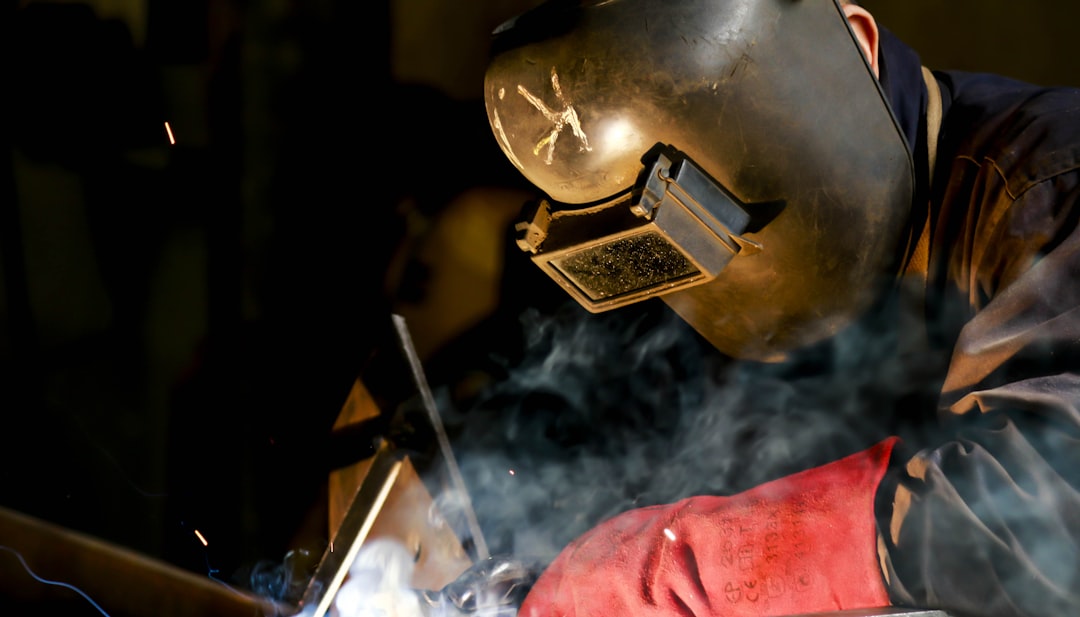
- Protect Your Eyes: Your eyesight is irreplaceable. A high-quality auto-darkening welding helmet is not a luxury; it is a necessity.
- Protect Your Lungs: Even without the risk of phosgene, welding fumes are harmful. A respirator designed for welding fumes is vital, especially when working indoors or in poorly ventilated spaces.
- NEVER USE CHLORINATED BRAKE CLEANER: Under NO circumstances should you ever use chlorinated brake cleaner (or any product containing tetrachloroethylene) to prepare metal parts for welding. Always check the label. There are many safe alternatives for degreasing metal; consult with welding supply experts or do your research. Your life absolutely depends on it.
The Future of Workshop Safety: A Call to Action
We predict that awareness of the welding brake cleaner danger will become a cornerstone of responsible welding education, moving from a niche topic to a universally understood “third rail” of workshop safety.
Your eyes, your lungs, and your skin are your most valuable tools. Protect them. But most importantly, protect your life by understanding the invisible chemical dangers around you.
Please, share this information. Post it in forums, send it to a friend who welds, discuss it in your local maker space. Spreading awareness is the first and most powerful line of defense. The life you save could be that of a friend, a colleague, or a fellow enthusiast who simply didn’t know.