





Your Home, Your Brain, Your Hands: When Technology Becomes Craft
Imagine this: your home understanding your rhythms, taking care of you, responding to your desires. What was once pure science fiction is today a tangible reality we call “the smart home.” But wait, there’s another trend that fills us with pride: the passion for “Do It Yourself” (DIY), that spark that drives us to create, personalize, and feel the satisfaction of something made with our own hands. What if I told you that these two forces, cutting-edge technology and good old craftsmanship, can not only coexist but are destined to transform our spaces into something much more… yours? This is where we explore that magic, that fusion that turns your house into a reflection of your ingenuity and your personality.
The Magic of the Smart Home: Connection That Simplifies Your Life
A smart home is, in essence, a home where devices and systems “talk” to each other, where you can control them remotely or program them to do things on their own. Its charm lies in the promise of a simpler, safer life that also saves you money.
Wake Up, Your Home Awaits (Without Lifting a Finger)
At the heart of it all is pure convenience. Can you imagine waking up to lights gently turning on, the thermostat already set to your perfect temperature, and coffee brewing, all before you even get out of bed? This is not a dream; it’s life with smart lighting systems, thermostats that learn from you, locks that welcome you, and voice assistants that are your personal butlers. Boring tasks become free moments for what truly matters. Your home not only obeys, it learns and anticipates your needs!
A Smart Home Cares for Your Wallet and the Planet
Beyond convenience, a smart home is a genius at saving. Your thermostat doesn’t just heat or cool; it learns when you’re home and when you’re not, optimizing every drop of energy. Those “dumb” plugs that consume energy even when the appliance is off become smart and cut out “phantom consumption.” Too much light outside? The indoor lights dim automatically. Is it going to rain? The garden irrigation pauses. Your home becomes an expert in managing resources, lowering your bills and, incidentally, leaving a much gentler footprint on our planet.
Peace of Mind, Within Reach of Your Hand (or Voice)
And let’s talk about that priceless feeling: security. Cameras that monitor, sensors that notify you if a window opens, smoke detectors that protect you, and locks you control. Receive a mobile alert if something is unusual, see who’s at the door wherever you are. Going on vacation? Your home can simulate occupancy by randomly turning lights on and off. A relative coming over? Open the door remotely. It’s a peace of mind that old systems simply couldn’t offer.
Your Home, Your Personal Cinema and Concert Hall
Even your entertainment transforms. Music in every corner, without wires. A movie night that feels like you’re in the most premium theater, with lights adjusting to create the perfect atmosphere. Your home doesn’t just play; it creates the experience, taking entertainment to a whole new level.
A Home for Everyone: More Autonomy, More Life
For those facing mobility challenges, our elders, or people with disabilities, the smart home is a true ally. Control lights, blinds, or open doors with just your voice. Systems that monitor and alert in case of a fall. Technology breaks barriers, simplifies daily life, and allows people to live with more autonomy, in their own home, for longer. It’s a direct improvement in quality of life.
Your Home Tells You Stories (and Helps You Improve)
Finally, your home becomes an open book about how you live in it. How much energy do you use? How is the air you breathe? How often do you open that door? The data it collects gives you valuable clues to optimize your comfort, be more efficient, and live more securely. It’s like having a personal trainer for your home.
The Spark of “Do It Yourself”: It’s Not Just Building, It’s Creating
The DIY movement is not a fad; it’s a human soul’s need to create, to be self-sufficient, and to be in control. It has evolved from fixing things to a modern form of art and innovation.
Why Settle for Standard When You Can Have Unique?
The great strength of DIY is being able to have something yours, tailor-made. In a world full of identical mass-produced items, DIY is your personal stamp. From a piece of furniture that fits perfectly in that corner to a technological solution nobody else has, “do it yourself” is the celebration of originality, of your own signature in every space and object.
Ingenuity and Savings: Your Wallet Will Thank You
And of course, savings. Doing it yourself means skipping labor costs and, often, finding cheaper materials or even recycling. It’s not just for those on a tight budget; it’s a philosophy of ingenuity, of doing more with less, of finding creative solutions that don’t empty your wallet.
Every Project, a New Learning Adventure
Every DIY project is a masterclass. Carpentry, soldering, programming a chip, 3D design… it pushes you to learn, to research, to try. The satisfaction of mastering a new technique or solving a puzzle with your own hands is immense. It’s constant growth, a trial and error that makes you more capable and confident.
Doesn’t It Exist? Then You Create It!
Sometimes, the products sold simply don’t fit what you need. That’s where DIY comes in! It allows you to identify a gap and design your custom solution. This ability to innovate and adapt is pure gold in the smart home, where needs can be very, very specific, and commercial offerings sometimes fall short (or are too expensive).
Repair Instead of Replace: A Gesture for the Planet
In this “throwaway” era, DIY is an act of sustainability. Repairing instead of buying new extends the life of things and reduces waste. And if you build from scratch, you can choose responsible materials and design with future maintenance and repair in mind. It’s good for your wallet and, above all, for the environment.
You’re Not Alone: A Community of Creators By Your Side
The DIY movement has exploded thanks to the internet. Forums, blogs, YouTube, ‘maker spaces’… these are places where you share ideas, find tutorials, schematics, and solutions. It’s a global network that empowers you, democratizes knowledge, and encourages anyone, even a beginner, to tackle complex projects with the support of an entire community.
The Magical Fusion: When Your Smart Home Becomes a Personal Work of Art
The real spark ignites when smart home functionality meets DIY creativity and personalization. This union doesn’t just add up; it multiplies the possibilities!
Your Imagination is the Limit (Not the Store)
Commercial smart products are great, yes, but they come with their mold. DIY frees you from that. A humidity sensor camouflaged in that designer pot you love so much? A control panel made from recycled wood to match your living room style? Lights that not only change color but are integrated into that shelf you just made? DIY allows you to design technology to fit perfectly into your life and your home, transforming your smart home from a bunch of gadgets into a living extension of your personality.
Cutting-Edge Technology Without Emptying Your Wallet
Having a super smart home with all the bells and whistles can be very expensive. But the good news is that many basic electronic components are surprisingly cheap. Chips like Arduino or Raspberry Pi, a bunch of sensors… if you assemble and program them yourself, and make the casings with inexpensive (or existing) materials, you can create advanced solutions for a fraction of the cost in a store. Intelligence at your fingertips and in your pocket!
Unique Solutions for Unique Problems (Nobody Else Has Them, Except You!)
Some things you need at home are so specific that no product exists for them. How to control the water level of that special garden fountain? How to make that beloved old appliance “smart”? DIY gives you the freedom to build custom solutions. Imagine a system that waters your plants based on exact soil moisture, or that turns on that vintage electric blanket at a precise time. This is how you integrate the old into the digital world.
The Power to Know and Decide: Your Home, Your Rules
When you build your own system, you know it inside out. You know how every piece works. This not only makes it easier to fix if something goes wrong, but it gives you absolute control over your privacy and data security. There are no ‘black boxes’ or mysterious programs. You decide what information is collected, how it is used, and where it is stored. It’s a relief from today’s privacy concerns.
Ugly and Technological? Never! Your Home, Your Style
A frequent complaint is that smart technology can be a bit ugly, with its plastic gadgets that clash. DIY allows you to integrate technology invisibly, or even make it the center of attention. Think of smart speakers with carved wooden casings, switches that look antique but are super smart, or touch screens embedded in the wall with a designer frame. Your craftsmanship can transform the technological into something beautiful.
More Than a Project, a Fulfilling Passion
For many, this blend of smart home and DIY is much more than a practical solution; it’s a passion that enriches you. It’s an outlet for your creativity, a challenge for your mind, and an opportunity to learn non-stop. Each finished project not only improves your home but leaves you with an incredible sense of personal achievement and satisfaction.

Get Hands-On! Projects That Combine Art and Algorithms
The integration of technology and craftsmanship opens up an unlimited range of projects. Here we explore some practical ideas that illustrate this powerful synergy:
1. Lighting to Your Taste (and Very Smart)
- Designer Lamps with Smart Bulbs: Create that dreamed-of floor or table lamp with fine woods, wrought metal, or ceramic. Then, just add a smart bulb (Wi-Fi or Zigbee). The result? A unique piece of art you can control with your voice, an app, or that turns on by itself.
- Ambient Lighting Integrated into Furniture: Design and build that shelf or TV stand. While doing so, hide programmable LED strips (like WS2812B or Neopixel) with a small brain like the ESP32. This way, you can have lights that change color with music or movies, all perfectly integrated into a beautiful and functional piece of furniture.
- Wardrobe Lights That Understand You: Instead of typical lights, make your own casings (wood or 3D printed) for motion sensors and small LED strips. They will turn on just when you open the wardrobe or a drawer, providing personalized and very practical light.
2. Your Home’s Climate, Under Your Creative Control
- DIY Smart Blinds/Curtains: Use small motors and a microcontroller to automate your blinds. The artisanal part is designing a discreet mechanism and a casing that blends with the window, perhaps made of wood to match the frame.
- Indoor Weather Station with Your Stamp: Build an elegant frame or a small sculpture to hide temperature, humidity, and air quality sensors. A small screen (OLED or LCD) with an ESP32 will show you the data beautifully, turning technology into another ornament.
- Smart and Discreet Irrigation for Your Plants: Combine a mini-pump, humidity sensors, and a microcontroller. Design a water reservoir that isn’t noticeable or integrate it into a large pot, with irrigation tubes that are barely visible, camouflaged with stones or branches.
3. Tailored Security (and Very Ingenious)
- Discreet Smart Locks: Sometimes you don’t need to change the entire lock. You can integrate a small smart motor into the existing mechanism. The trick is to create a cover or a system that hides the technology, maintaining the aesthetics of your door.
- DIY Digital Peephole with Hawk Eye: Make a sturdy casing for a Raspberry Pi camera and a motion sensor. Connect it to another Raspberry Pi that records everything on an SD card or your local network. Goodbye cloud subscriptions and hello personalized notifications!
- Magic Mirror with Guardian Function: Turn a full-length mirror into a smart window. Use a two-way mirror, a monitor, and a Raspberry Pi to show you the weather, news, and, most importantly, images from your security cameras or alerts. Your skill will be in the frame and making the monitor fit perfectly.
4. Your Entertainment, More Beautiful and Integrated
- Crafted Smart Speakers: Fabricate high-quality wooden boxes for your smart speakers (like an Echo Dot) or for speaker components you assemble yourself. Not only will it sound better, but you’ll design it to match your living room style.
- Hidden Entertainment Center: Design a TV cabinet with secret, well-ventilated compartments for consoles, receivers, and mini-computers, with all cables organized. You can even embed sensors to control them without having to open the doors.
5. The Brain of Your Home, With Your Personal Touch
- Your Own Custom Smart Home Hub: Install software like Home Assistant or OpenHAB on a Raspberry Pi. Then, create a wooden, metal, or resin box, perhaps with a small touch screen. This way, your smart ‘brain’ will be another piece of your decoration!
- Physical Control Panels That Respond to Your Hand: Build a wall panel with real buttons, switches, and knobs (connected to an Arduino or ESP32) to control lights, blinds… The art is in the ergonomic and beautiful design, with custom engravings or labels.
Your Survival (and Creation) Kit for the DIY Smart Home
Embracing the DIY smart home journey requires a mix of traditional and technological skills. But don’t worry, it’s easier than it looks!
Essential Tools for Your Toolkit
Your usual toolbox will be your best friend: screwdrivers, pliers, a utility knife, measuring tape, a hammer. And for electrical work: a drill, a soldering iron, a multimeter to understand wires, and a Dremel for fine details. Don’t forget glues, cable ties, and screws; they are the silent heroes of any project.
Specific Tools to Shape Your Ideas
If you work with wood: saws, sanders, chisels. If you dare with 3D: a 3D printer and software to design your parts. If metal is your thing: files, saws, and perhaps welding equipment. And to make everything perfect: paints, varnishes, brushes, whatever it takes for that final touch.
The “Smart Bricks” to Build Your Future Home
- The Brain: Arduino (for simple things), ESP32/ESP8266 (if you need Wi-Fi/Bluetooth), or a Raspberry Pi (for more powerful projects, like a control center).
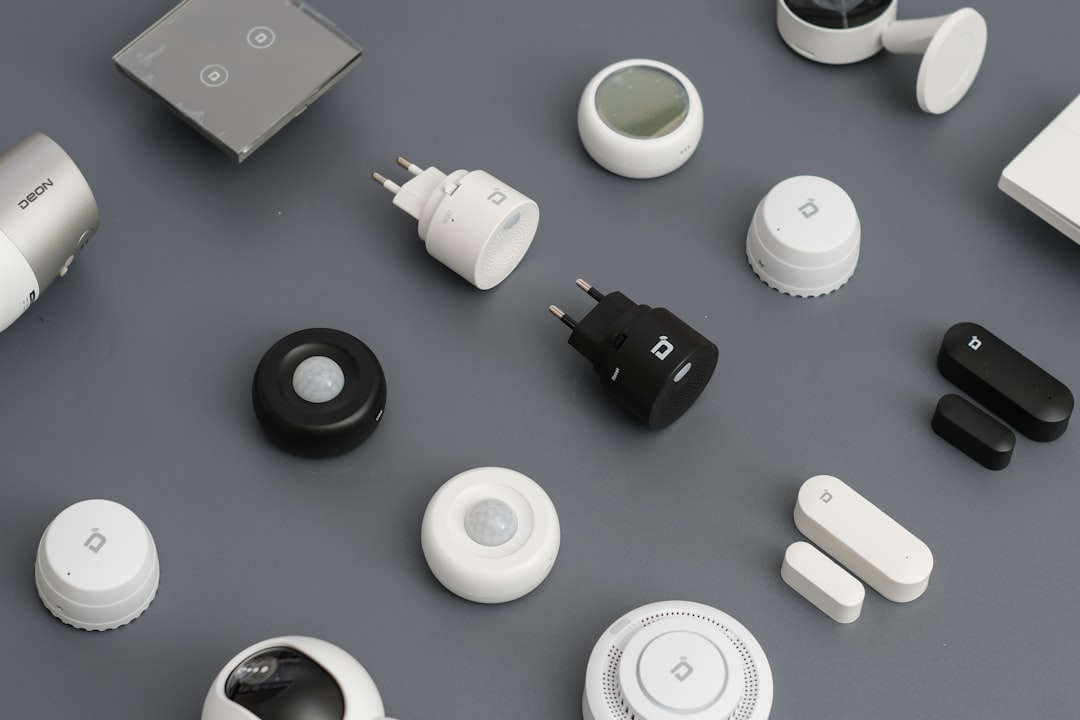
- The Eyes and Ears: Motion sensors, temperature/humidity sensors, light sensors, distance sensors, gas sensors, water sensors… these are your home’s senses.
- The Arms and Legs: Relays (to turn things on), motors, LED lights, buzzers… these are what make your home move.
- The Language: Wi-Fi, Bluetooth, Zigbee, Z-Wave modules (so everything understands each other).
- The Little Helpers: Resistors, capacitors, diodes… the ones that make electronics work.
- Your Laboratory: Breadboards, jumper wires, and PCBs to assemble your circuits.
- The Energy: 5V or 3.3V power supplies to bring your creations to life.
The Super-Skills You’ll Develop
Don’t be scared, you’ll learn them:
- Basic Electronics: Understanding how current flows, how wires connect.
- Programming: Knowing a bit of C++ or Python to give orders to your chips.
- Networking: Understanding how things connect via Wi-Fi.
- Design: Putting your ideas on paper or computer.
- Problem Solving: The most important! When something goes wrong, knowing what to look for and how to fix it.
- Soldering: Joining components solidly.
- Tool Handling: Using everything safely and efficiently.
The Creator’s Path: Obstacles (and How to Overcome Them)
While it’s a rewarding adventure, the DIY smart home path has its challenges. Knowing what they are will help you avoid or overcome them.
1. Patience is Gold (and Time, Too)
We won’t lie to you, this takes time. Researching, designing, buying parts, assembling, programming, debugging… each step can take hours. So, a lot of patience and realistic expectations are your best allies.
2. Learning Has Never Been So Fun (and Sometimes, a Challenge)
Entering the world of smart DIY is like learning a new language: electronics, programming, 3D design. It might be challenging at first, but the good news is that the internet is full of tutorials, forums, and people willing to help you. It’s easier than ever!
3. The Frustration of Failure (and the Glory of Solving It)
Almost nothing works the first time; it’s part of the game! Finding and fixing errors, both hardware and software, can be the most frustrating, but also the most rewarding. You need a curious mind and not to give up. A multimeter and knowing how to use it will be your best detectives.
4. Watch Out for Electricity! (Always With Caution)
Working with wires, even low current, always carries risk. Learn safety rules, use protection, and if you have doubts about your home’s electrical installation, call a professional! Your safety comes first.
5. Thinking Big (and Long-Term)
A successful project is great, but what if you want to do many? What works for one can become complicated when multiplied. Think about how you’re going to maintain it, how you’re going to update it if something needs changing. Documenting your work is key!
6. Make It Beautiful (So Your Partner Doesn’t Complain!)
Functionality is important, but beauty too. A brilliant invention can be a disaster if it’s ugly or gets in the way. Involve those you live with in the design and make sure the final result is useful AND beautiful. Here, your craftsmanship makes the difference.
7. Make Everything Speak the Same Language
The smart world is a Tower of Babel. Making your DIY creations understand the devices you already have (or your control center) can be a challenge. Open-source tools like Home Assistant are great for this but require you to dedicate time to them.
8. You Are the Technical Support
Store-bought products have a warranty, but your DIY projects don’t. If something fails, you are the technical support. That’s why it’s vital to document your work well and test thoroughly. You are your own hero!
Tomorrow Is Already Here: Your DIY Smart Home Is the Future
The future of this fusion between your smart home and your own hands is bright, driven by new advances and an ever-growing community of creators.
1. Increasingly User-Friendly and Powerful Tools
Microcontrollers are becoming smaller, more powerful, and cheaper. 3D printers are more accessible to more people. Design and programming software are becoming easier to use. This means more people can join the adventure of creating their own technology!
2. A Growing and Supportive Global Community
Platforms like GitHub, Reddit, Discord, and YouTube will continue to be the best places to share ideas, tutorials, and solutions. More and more people will share their projects, which will accelerate innovation and help newcomers.
3. A Future Where Everything Understands Each Other (Fewer Headaches!)
Projects like Matter and Thread are here so that devices from different brands can communicate seamlessly. For DIY, this is a blessing: less time fighting with compatibility and more time building and customizing, knowing that your creations will integrate effortlessly.
4. Your Home Thinking for Itself (and Privately)
Soon, your microcontrollers will be able to use Artificial Intelligence for even smarter automations, without relying on the cloud. Imagine DIY systems that learn your routines, recognize gestures or voices with greater precision, and make decisions within your own home, with total privacy.
5. A Commitment to the Planet and Your Privacy
As we become more concerned about the environment, smart DIY will seek greener solutions: recycled materials, durable designs, things that can be repaired. And by having total control over your data, DIY addresses those ethical concerns about privacy in the digital age.
6. Your Home in the Virtual World (So You Design It Without Errors)
With 3D design and simulation software, we will soon be able to create “digital twins” of our homes. This will allow us to design, test, and optimize our smart solutions in a virtual environment before building them for real—fewer errors and faster results!
Conclusion: The Home of the Future, Made by You
So, what does all this mean? That the blend of your smart home and “do it yourself” is much more than just putting gadgets in your house; it’s a revolution in how we live and feel our space. It’s about giving your home your own touch, finding ingenious solutions for those little problems only you have, and feeling incredible satisfaction seeing how your own hands and mind have created an environment that understands and adapts to you.
When you take control of technology in your home, you not only get spaces that work wonderfully, but you empower yourself with new skills and understand your environment much better. Your house ceases to be just a place where you live and becomes your personal canvas, your idea laboratory, and, most importantly, a unique reflection of who you are.
In a world where everything tends to be the same, your DIY smart home is a declaration of individuality, of self-sufficiency. It is proof that the most advanced technology, the one that truly touches your soul, is often the one you have created yourself with passion and ingenuity. The home of your dreams, that perfect tomorrow, will be the one you have helped build, where every wire and every piece of wood tells the story of your creativity and your personal touch. It is your story, made home.